

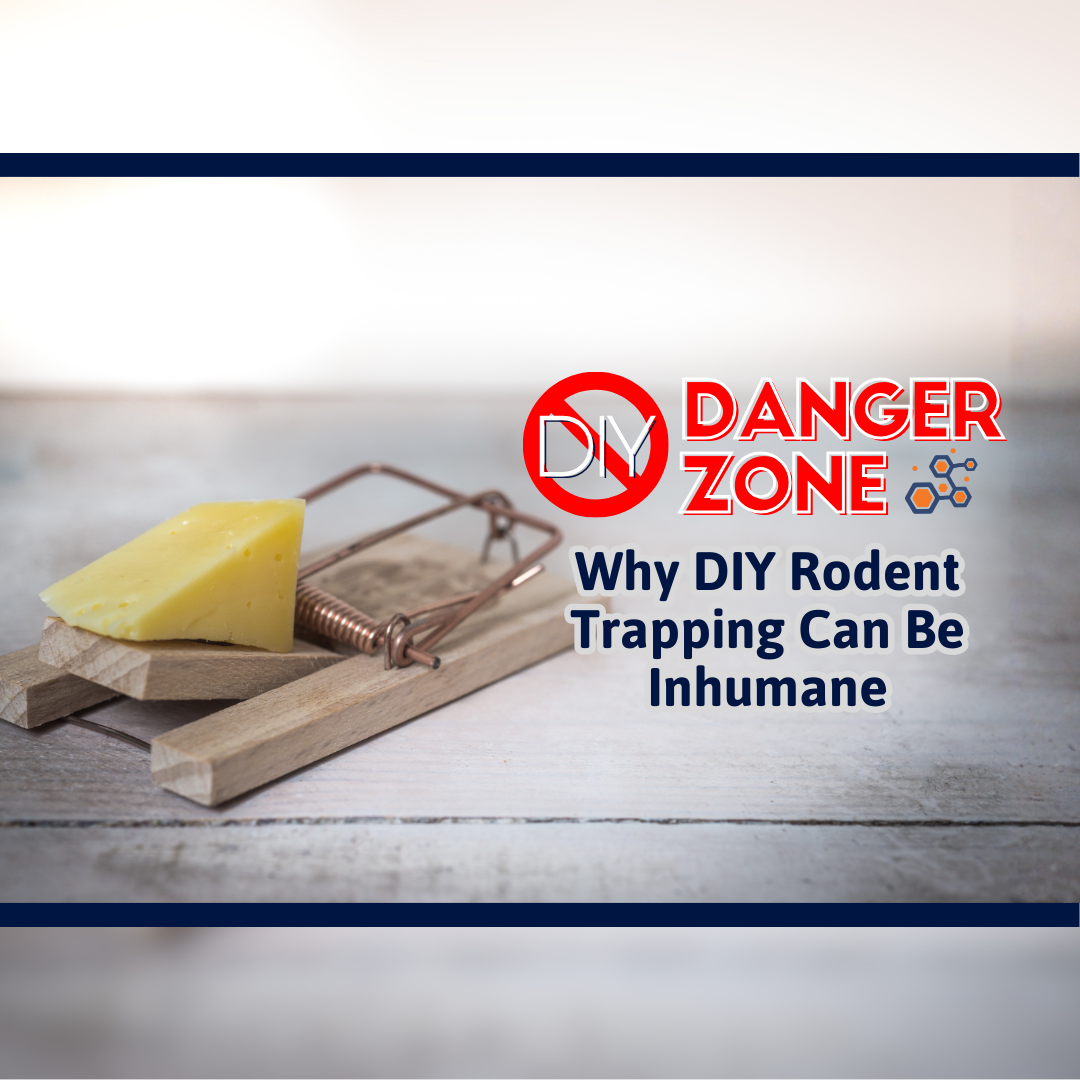
DIY Danger Zone: Why DIY Rodent Trapping Can Be Inhumane
When rodents show up in the attic or kitchen, it’s natural to want them gone fast. Traps at the hardware store seem simple. But most DIY trapping ends up causing unnecessary suffering for the animal, unsafe conditions for the homeowner, or both. This week’s DIY Danger Zone breaks down why rodent trapping is more complicated than it looks and why humane, effective control takes more than setting a few traps.
1. Most DIY traps don’t kill instantly
Snap traps only work humanely when placed and calibrated correctly. When they aren’t set with the right trigger tension or trap style, rodents often get caught by a leg, tail, or snout instead of the intended quick strike. This leaves the animal alive and suffering, sometimes for hours. Glue boards are even worse. They trap rodents in full panic and distress, and many homeowners struggle with what to do next.
2. Incorrect trap placement leads to prolonged distress
Rodents move along specific travel paths. If traps are placed in the wrong location, rodents may get injured without being caught fully. You may see signs of dragging, fur, or blood, which indicates a trapped rodent escaped and is suffering somewhere in the home. This creates a second problem. An injured rodent may hide in a wall void or cabinet space and die slowly where it cannot be reached.
3. DIY trapping often leads to starvation or dehydration
Live traps sound humane, but very few people check them often enough. Rodents can die from stress, dehydration, or cold after being stuck too long. Texas law also restricts where trapped wildlife can be released, and releasing a stressed rodent into an unsafe environment can be just as inhumane as catching it improperly.
4. Misidentifying the rodent makes the trap ineffective
House mice, roof rats, and Norway rats all behave differently. Their habits, speed, bite force, and trap shyness vary. Using the wrong trap for the wrong species increases the chance of injury without a clean outcome. DIY setups also miss the bigger picture. One caught rodent doesn’t fix the entry points or the colony behind it.
5. Improper cleanup exposes families and pets to health risks
A rodent caught improperly often leaves behind urine, droppings, nesting material, or parasites. Homeowners trying to clean this without protection risk exposure to bacteria, allergens, and fleas. Professional exclusion teams use proper sanitation materials and techniques to make sure the area is safe after removal.
6. Humane control requires a full plan, not just traps
Ethical rodent control focuses on preventing suffering and preventing more rodents from entering the home. That means identifying entry points, sealing them correctly, using the right traps for the right species, and monitoring them frequently. DIY setups usually skip at least one of those steps, which is why so many homeowners end up with injured rodents, strong odors, or recurring infestations.
The safer solution
Trapping sounds simple until you’re face-to-face with a panicked rodent or one that didn’t die quickly. Humane rodent control requires experience, safety equipment, and an understanding of rodent behavior. Our exclusion process at Paragon focuses on quick, humane removal and long-term prevention so you’re not stuck dealing with injuries, odors, or repeat invasions.
If you’re hearing noises or seeing activity, we can inspect the home and create a plan that protects both your family and the animal from unnecessary suffering.