

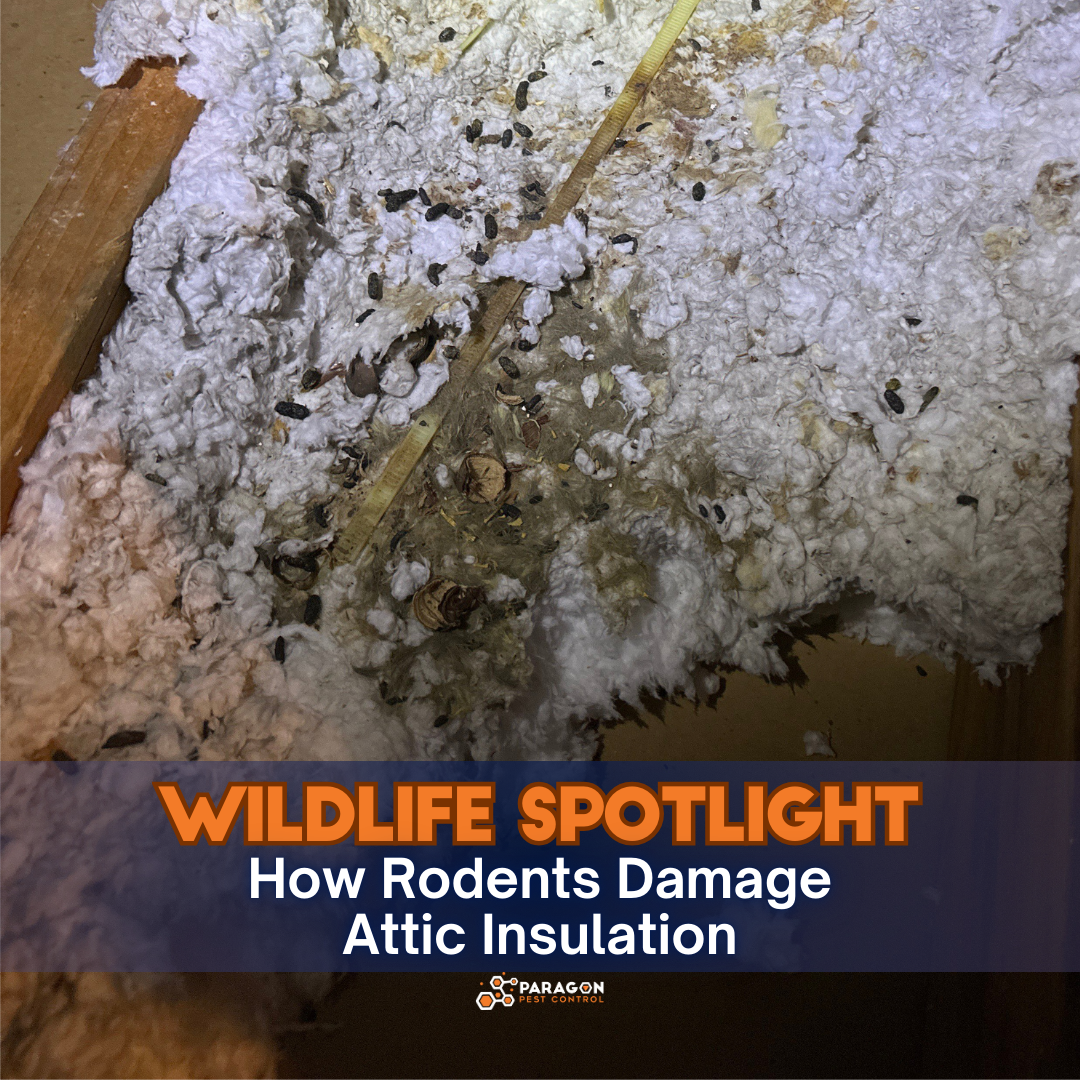
Wildlife Spotlight: How Rodents Damage Attic Insulation in DFW Homes
When temperatures drop or food sources shift, rodents like mice and rats start looking for warmth and shelter. Unfortunately, an attic with soft insulation is one of the easiest places for them to settle. Once they’re inside, their natural behaviors can create real problems for energy efficiency, air quality, and the overall health of the home.
This week’s Wildlife Spotlight takes a closer look at how rodents use attic insulation, what kind of damage they leave behind, and why professional removal and replacement is often necessary after an infestation.
Why Rodents Are Drawn to Insulation
Insulation checks all the boxes rodents look for when building a nest. It is warm, soft, easy to shred, and tucked away in a quiet area. Rodents prefer hidden, low-traffic spaces where they can move around without being disturbed. For them, insulation feels like an ideal place to raise young or wait out colder weather.
Once they settle in, they create networks of tunnels and pockets in the insulation. This kind of disruption reduces the insulation’s ability to retain heat and can raise energy bills over time.
Common Signs of Rodents in Attic Insulation
Rodents leave very consistent patterns when they move through insulation. Homeowners may notice one or more of these symptoms during or after an infestation:
Tunneling or burrowing paths. Rodents carve narrow runs as they move between food sources and nesting areas, flattening or carving through insulation.
Shredded material. They tear insulation into small pieces to create nests, which can lead to uneven insulation coverage across the attic.
Droppings and urine contamination. Rodent waste seeps into insulation and surrounding materials. Even a small population can contaminate a large area over time.
Odors. A musty or sour smell often develops when urine-soaked insulation sits in a warm attic.
Compacted insulation. Constant movement compresses insulation, reducing thickness and lowering its R-value.
All of these issues affect the comfort and cleanliness of the home, but contamination is often the biggest concern.
Why Contaminated Insulation Must Be Removed
Rodent droppings and urine do not stay contained to one spot. They spread through insulation fibers and into the air as the attic warms and cools. This can affect indoor air quality and create potential health concerns for the household.
Even once rodents are eliminated, the damage remains. In many cases, the insulation can no longer perform the way it should. Professional removal is the safest way to clear out contaminated or compacted material. A fresh layer of insulation restores the home’s energy efficiency and removes any lingering odor or waste.
The Role of Exclusion Before Replacement
Before any insulation work begins, rodents must be fully excluded from the home. Otherwise, new insulation becomes a fresh nesting site. Exclusion focuses on sealing entry points around the roofline, siding, garage, and foundation. Once these areas are secured and activity has stopped, removal and replacement can be completed.
This process protects the long-term health of the home and prevents recurring infestations.
When To Consider Insulation Replacement
A replacement may be needed if:
There is visible contamination in multiple sections of the attic
You notice strong odors coming from the attic or ceiling
Insulation levels appear uneven, compacted, or shredded
You hear ongoing activity and later discover droppings or nesting areas
A previous infestation was not followed by a cleanup or sanitation service
If you are unsure, a professional inspection can confirm whether your insulation has been damaged or if only spot cleaning is required.
Restoring Your Attic After a Rodent Infestation
Replacing damaged insulation restores proper temperature control, improves airflow, and removes contamination that could linger for years. After exclusion, sanitation, and removal, new insulation is blown in evenly throughout the attic to bring your home back to a clean and healthy baseline.
Rodents are a natural part of the local ecosystem. Inside a home, however, the damage they cause can be costly and unpleasant. Understanding how they use insulation is the first step in protecting your home and catching problems early.