

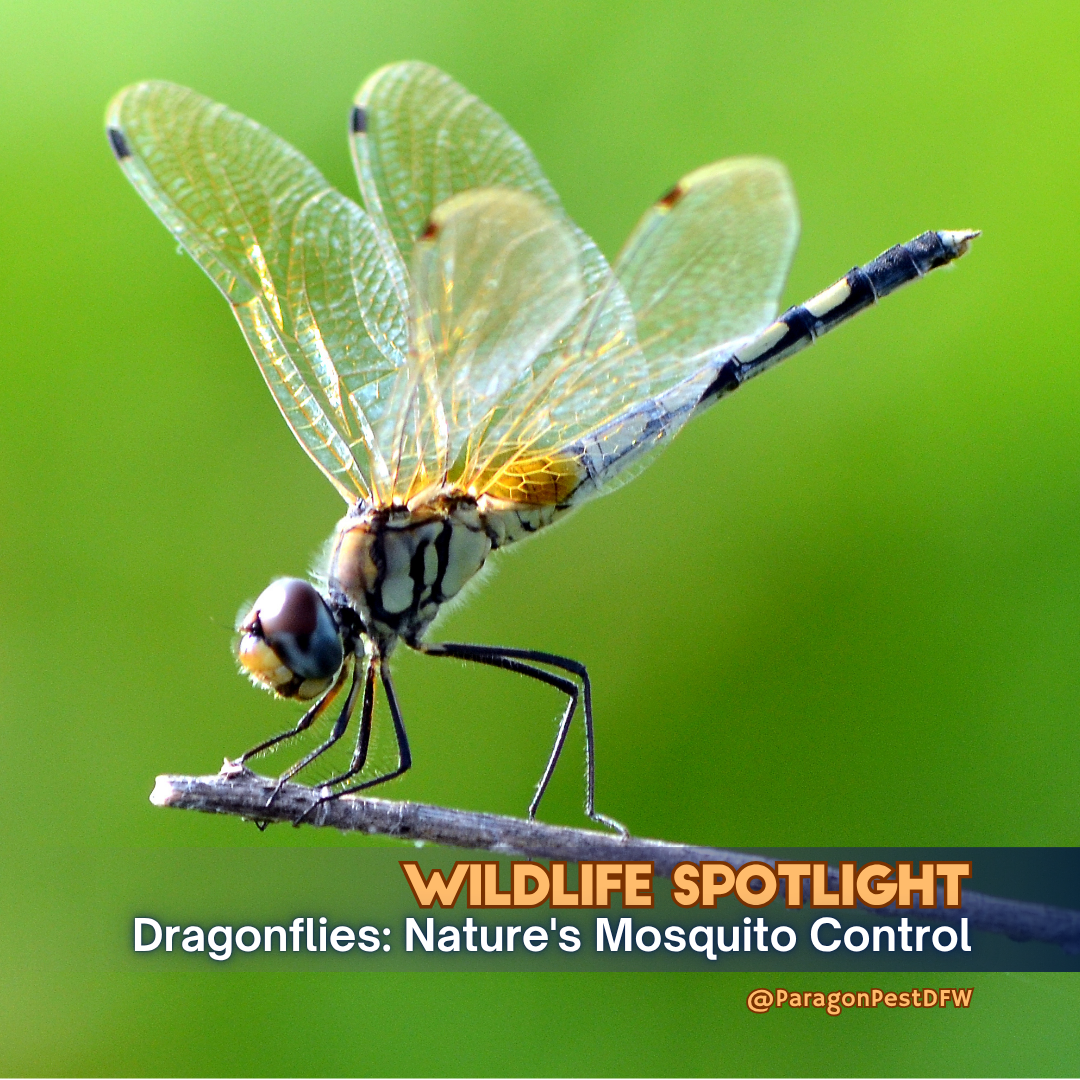
Wildlife Spotlight: Why Dragonflies Are Nature's Best Mosquito Control
If you've spent any time near a pond, a creek, or even a backyard water feature in the Dallas-Fort Worth area during spring or summer, you've probably noticed dragonflies. They move fast, hover with precision, and tend to show up in numbers when the weather warms. Most people enjoy seeing them without thinking much about what they're actually doing.
It turns out they're working. Dragonflies are one of the most effective natural predators of mosquitoes in North Texas, and understanding why helps explain a lot about how mosquito populations behave near standing water.
How Dragonflies Hunt Mosquitoes
Dragonflies are among the most skilled hunters in the insect world. Studies have shown that they successfully catch their prey on more than 90 percent of hunting attempts, which puts them well ahead of most other predatory insects and even most birds of prey. Their large compound eyes give them nearly 360-degree vision, and they can calculate a target's trajectory mid-flight and intercept it rather than simply chasing it.
Adult dragonflies eat flying insects, including adult mosquitoes. But the more significant impact happens underwater, before most people are even thinking about mosquito season.
The Larval Stage Is Where It Really Matters
Dragonflies spend most of their lives as nymphs living beneath the surface of ponds, slow-moving streams, and any other body of standing or slow water. That larval stage can last anywhere from a few months to several years depending on the species. During that entire time, dragonfly nymphs are actively feeding on aquatic prey, and mosquito larvae are a significant part of that diet.
Mosquito larvae also develop in standing water, which means dragonfly nymphs and mosquito larvae often occupy the same environment at the same time. A healthy dragonfly population in a pond or water feature can meaningfully reduce how many mosquitoes make it to the adult stage before ever taking flight.
This is why you'll often notice fewer mosquitoes near natural water sources that have dragonfly activity, and more mosquitoes around neglected standing water like clogged gutters, uncirculated birdbaths, or low spots in a yard that hold water after rain. Dragonflies aren't there, so nothing is keeping the mosquito larvae in check.
What Dragonflies Look Like and When to Spot Them
Dragonflies are easy to recognize once you know what to look for. They hold their wings out flat and perpendicular to their body when at rest, which distinguishes them from damselflies, which fold their wings back. They come in a wide range of colors across different species, from vivid blues and greens to more subdued browns and yellows, and most have long slender abdomens and large heads dominated by their compound eyes.
In the Dallas-Fort Worth area, dragonfly season runs roughly from late spring through early fall. You're most likely to see them near water in the morning or early afternoon when temperatures are warm but not at peak heat. They patrol territories, which is why you'll often see the same dragonfly returning to hover over the same spot repeatedly.
How to Make Your Yard More Dragonfly-Friendly
If mosquitoes are a recurring problem in your backyard, dragonflies are worth thinking about as part of the natural picture. A few things that support dragonfly populations also happen to reduce the conditions that favor mosquitoes.
A small pond or water feature with established aquatic plants gives dragonflies a place to lay eggs and nymphs a place to develop. Moving water or a well-maintained feature with aquatic vegetation is more attractive to dragonflies than stagnant water, and it's less hospitable to mosquito larvae at the same time. Reducing pesticide use near water sources helps preserve the dragonfly population that's already present.
That said, dragonflies work best as a complement to other mosquito management strategies rather than a replacement for them. They're genuinely effective at reducing larvae in natural water, but they can't address all the standing water sources around a property, and they have no impact on the adult mosquitoes that are already active.
When Natural Isn't Enough
Dragonflies are a meaningful part of the local ecosystem and a genuine ally when it comes to mosquito pressure. In yards where conditions support them, they make a real difference. But in areas with significant standing water issues, dense vegetation, or neighboring properties that contribute to mosquito populations, natural predation alone usually isn't enough to keep things comfortable through a DFW summer.
Our mosquito reduction service is designed to work alongside the natural environment, not against it. If mosquitoes have been a problem in your yard and you want to know what your options look like, we're happy to take a look and talk through what makes sense for your specific situation.