

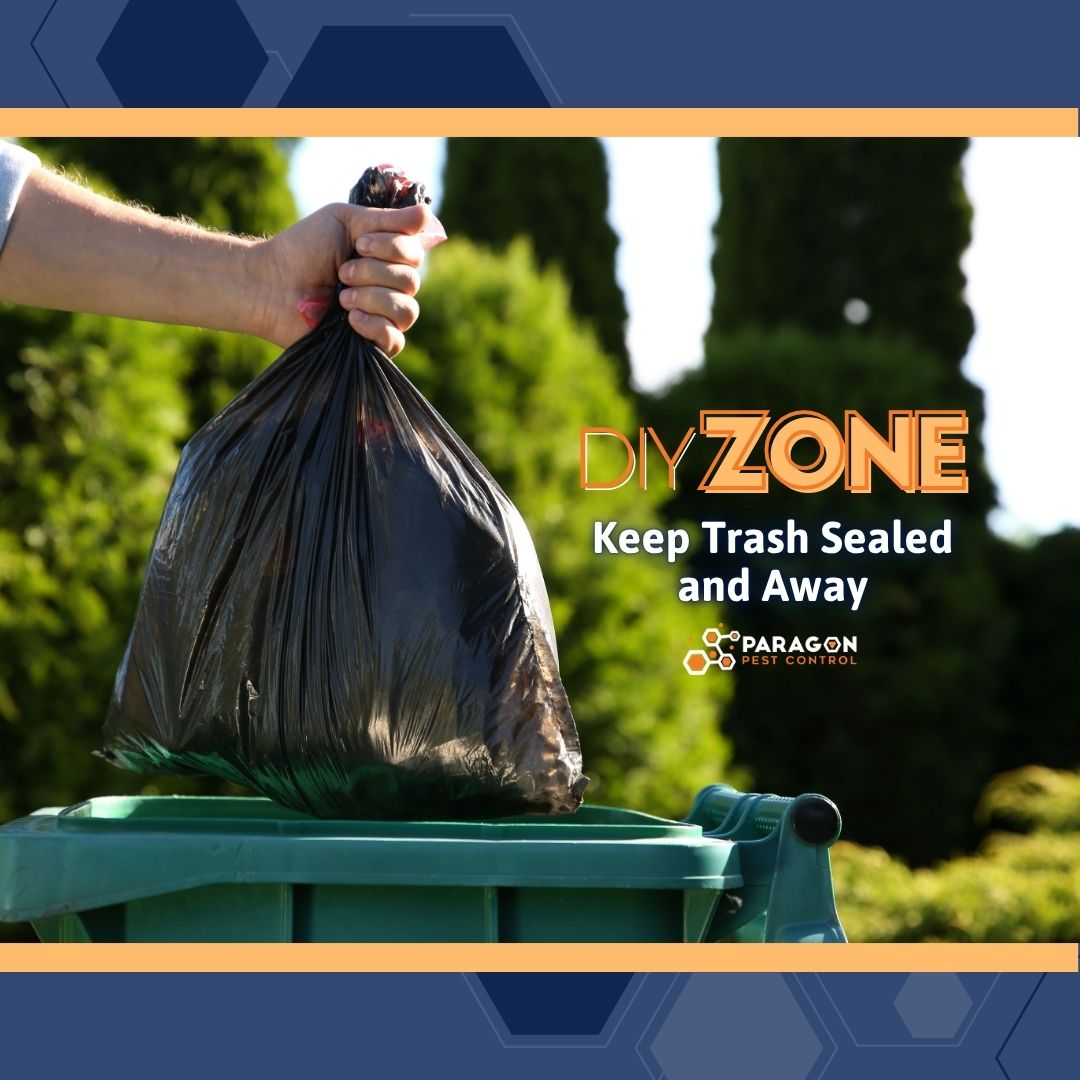
DIY Danger Zone: Keep Your Trash Sealed and Away
Taking out the trash probably isn't anyone's favorite chore. But where you keep your garbage can make a bigger difference than most people realize when it comes to pest prevention.
If your trash cans are overflowing, left uncovered, or sitting right against your home, they can become an easy food source for everything from ants and flies to rodents and even larger wildlife. Fortunately, a few simple habits can go a long way.
Why Trash Attracts Pests
To a pest, your garbage isn't garbage. It's dinner. Food scraps, drink containers, pet food bags, and even residue left inside the can can attract a wide variety of pests looking for an easy meal.
Rodents are drawn to leftover food. Flies look for places to lay their eggs. Ants follow even small spills and sticky residue. In some areas, raccoons and other wildlife may also see your trash can as an opportunity. The easier it is for pests to access your garbage, the more likely they are to keep coming back.
It's Not Just What's Inside the Can
Even if your trash bag is tied tightly, the outside of the can matters too. Leaking bags, spilled liquids, or food residue around the lid can be enough to attract insects. Giving your trash can a quick rinse every now and then helps remove odors and buildup that pests can detect long before we do. It's a small task that can make a noticeable difference.
Give Your Trash Some Space
One of the most common things we see is trash cans stored directly against the house. While it might seem convenient, it also gives pests a shorter path from the garbage to your home.
Whenever possible, keep trash cans a short distance away from exterior walls, garage doors, and entry points. It won't stop every pest, but it can make your home a less appealing next stop after they've finished exploring the trash.
A Lid Only Works If It's Closed
This one sounds obvious, but it's worth mentioning. A lid that's propped open because the can is overfilled doesn't offer much protection.
Keeping lids fully closed helps reduce odors, limits access for pests, and can even discourage larger animals from investigating your garbage in the first place. If your cans are consistently overflowing before pickup day, it may be time to spread the waste between multiple bins or consider a larger container if your city offers one.
Prevention Starts With the Little Things
You don't have to eliminate every insect or animal in your neighborhood to reduce pest activity around your home. Simple habits like keeping trash sealed, cleaning up spills, and storing garbage away from the house can make your property much less inviting. They're small changes, but they're often some of the easiest ways to help keep pests from becoming regular visitors.
Frequently Asked Questions
What pests are attracted to outdoor trash cans?
Outdoor trash can attract ants, flies, rodents, raccoons, opossums, and many other pests looking for food or shelter.
Should I keep my trash can next to my garage?
Whenever possible, it's better to keep trash cans a short distance away from your home's exterior. This can help reduce the chances of pests moving from the trash toward your house.
Does rinsing my trash can really help?
Yes. Food residue and spilled liquids can continue attracting pests even after the trash has been removed. An occasional rinse helps reduce odors and buildup.
Are closed trash can lids important?
Absolutely. A securely closed lid helps keep odors contained and makes it more difficult for insects, rodents, and wildlife to access the contents.
What if I'm still seeing pests around my trash cans?
If pest activity continues despite good sanitation habits, there may be another food source or nesting area nearby. A professional inspection can help identify what's attracting them.