

Wildlife Wednesday: Meet the Cicada Killer
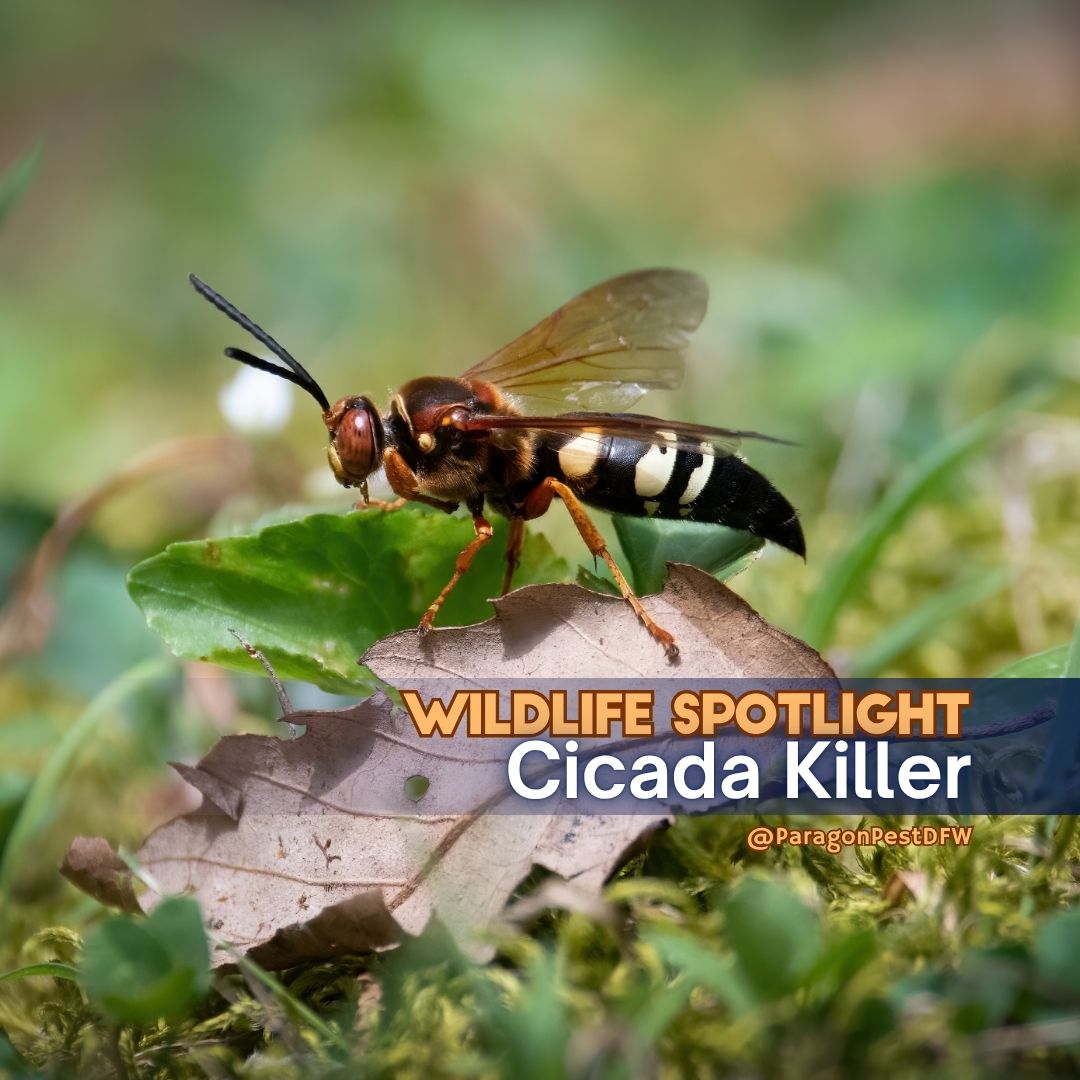
If you've spotted a wasp that's nearly two inches long flying low over your yard, your first thought was probably, "What on earth is THAT?" Every summer, we get questions about these giant wasps, and it's easy to see why. They're much larger than the paper wasps and yellowjackets most people are used to seeing. The good news? If it's a cicada killer, it's probably much less interested in you than you think.
Why Are They Called Cicada Killers?
Their name is actually pretty accurate. Female cicada killers hunt cicadas, sting them to paralyze them, and carry them back to underground burrows. The cicada becomes food for the next generation once the eggs hatch. It might sound dramatic, but it's simply part of nature. Cicada killers play an important role in helping keep cicada populations in balance.
Why Are They Flying Around My Yard?
Cicada killers are most active during the summer when cicadas are plentiful. They prefer sunny areas with loose, sandy, or well-drained soil where they can dig their burrows. That's why they're often found in flower beds, bare patches of lawn, playground edges, and landscaped areas.
If you see several flying close to the ground, they're often patrolling their nesting area rather than looking for people.
Are Cicada Killers Dangerous?
Despite their size, cicada killers are surprisingly docile. For most homeowners, simply giving them a little space is enough. Male cicada killers can appear territorial and may fly toward people who enter their space, but they don't have a stinger. They're simply investigating what wandered into their territory. Females do have a stinger, but they're focused on hunting cicadas, not people. They generally only sting if they're handled or feel trapped.
Should I Leave Them Alone?
In many cases, yes. Because they're solitary wasps, cicada killers don't build the large colonies that paper wasps or yellowjackets do. They aren't defending a communal nest full of hundreds of workers, which is one reason they're much less aggressive.
However, if they're nesting in an area where children play, around heavily used walkways, or in a location where people are likely to disturb them repeatedly, it may be worth having the situation evaluated.
The Bottom Line
Big doesn't always mean dangerous. Cicada killers may be one of the largest wasps you'll see in Texas, but they're also one of the least aggressive. Understanding what they are and why they're there can help take some of the mystery out of these impressive insects. And if you're ever unsure whether you're looking at a cicada killer, a paper wasp, or another type of stinging insect, we're always happy to help identify what you've found.
Frequently Asked Questions
How big are cicada killers?
Adult cicada killers can grow to nearly two inches long, making them one of the largest wasps commonly seen in Texas.
Do cicada killers sting people?
Female cicada killers can sting, but they rarely do unless they're handled or feel threatened. Males cannot sting.
Why do cicada killers keep flying toward me?
Male cicada killers are territorial and may investigate people who enter their nesting area. While it can be startling, they don't have a stinger.
Why are cicada killers digging holes in my yard?
Female cicada killers dig underground burrows where they'll place paralyzed cicadas for their developing young.
When are cicada killers most active?
They're typically seen during the hottest part of summer, when cicadas are abundant. In North Texas, that's usually from mid-summer into late summer.