

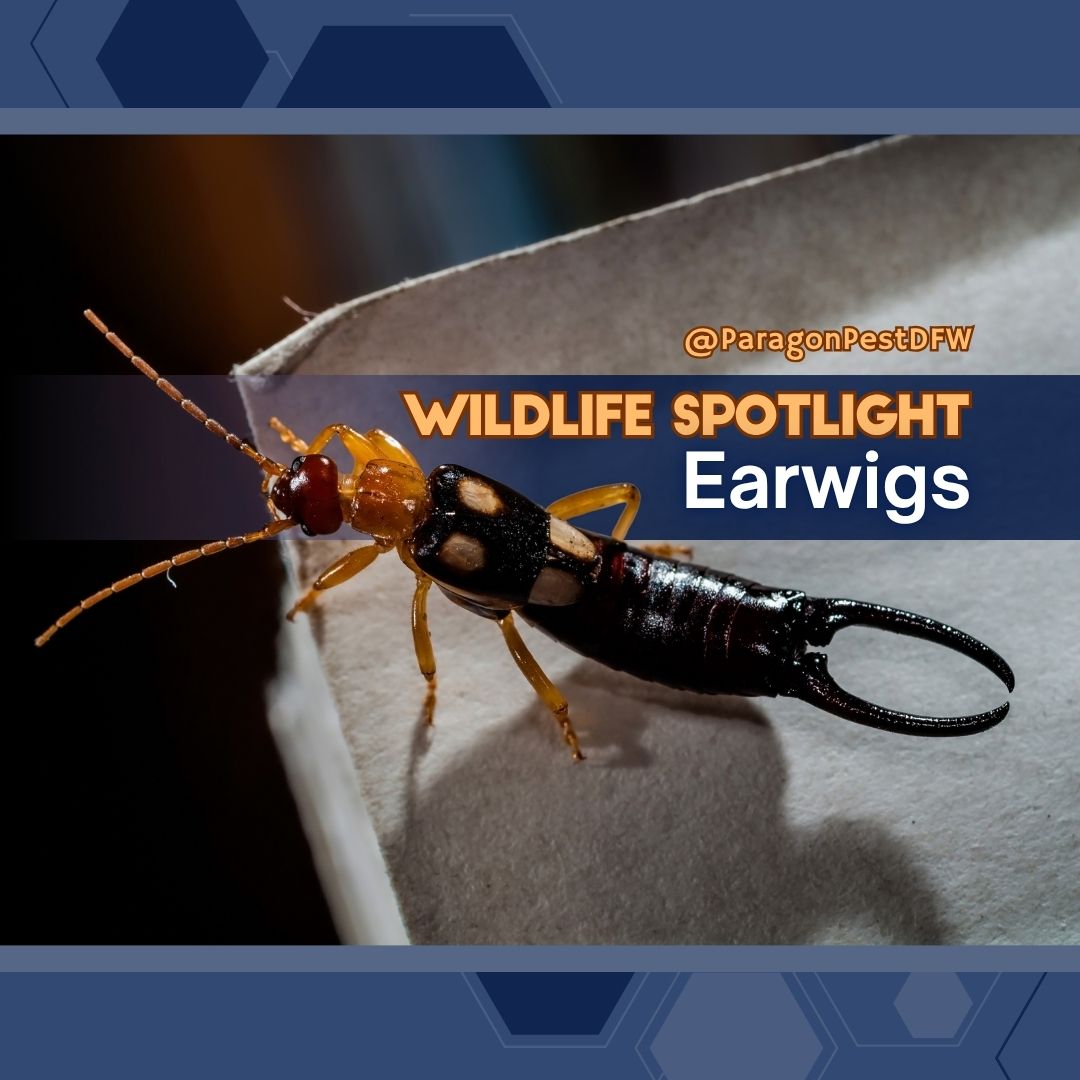
Wildlife Spotlight: Earwigs
If you've ever spotted a small insect with what looks like tiny pincers on its tail, chances are you've met an earwig. They're one of those bugs that seem to make people uncomfortable the moment they see them. Maybe it's the name. Maybe it's the pincers. Either way, earwigs have picked up quite a few myths over the years. The good news? They're much less intimidating than they look.
Do Earwigs Really Crawl Into People's Ears?
Let's get this one out of the way first. Despite their name, earwigs are not looking to crawl into your ears while you sleep. It's one of the oldest myths about these insects, but there's no evidence that it's something they normally do. In reality, earwigs spend their time searching for moisture, shelter, and food, not people.
Why Am I Seeing Earwigs Around My Home?
Earwigs thrive in damp, protected places. During the day, they're usually hiding under mulch, flower pots, landscape timbers, rocks, leaf litter, or anything else that gives them a cool place to escape the Texas heat. At night, they come out to feed.
If conditions outside become too hot or too dry, it's not unusual for a few earwigs to wander indoors looking for moisture. Bathrooms, laundry rooms, kitchens, and garages are some of the most common places homeowners find them.
Finding one or two inside doesn't necessarily mean you have an infestation. Often, they've simply wandered in through small gaps around doors or windows.
Are Earwigs Dangerous?
Not really. Those pincers on the end of their abdomen are mainly used for defense and mating. While an earwig may try to pinch if it's handled, the pinch is usually mild and isn't dangerous to people or pets. They don't spread diseases, and they aren't interested in biting people. They're more of a nuisance than anything else.
Can Earwigs Damage My Plants?
Sometimes. Earwigs feed on decaying plant material, fungi, and other insects, which can actually make them beneficial in some situations. However, if populations become large, they may also feed on flowers, seedlings, fruits, and tender leaves. That's why gardeners occasionally notice small holes or ragged edges on plants where earwigs have been active.
How Can I Make My Yard Less Attractive to Earwigs?
Because earwigs are drawn to moisture and shelter, a few simple changes can help reduce the chances of seeing them around your home. Keeping mulch from piling directly against the foundation, removing unnecessary yard debris, fixing leaky faucets or irrigation issues, and reducing areas where moisture collects can all make your property less inviting.
If earwigs are making their way indoors regularly, it's also a good idea to check weather stripping, door sweeps, and other common entry points.
The Bottom Line
Earwigs may look intimidating, but they're usually just looking for a cool, damp place to hide.
Most of the time, they're outdoor insects that accidentally end up inside while searching for moisture or shelter. Seeing one every now and then isn't unusual, especially during the hottest parts of a North Texas summer.
If you're seeing large numbers of earwigs indoors or around your home, though, it could be a sign that conditions around your property are especially attractive to them. Addressing those conditions is often the first step toward reducing activity.
Frequently Asked Questions
Can earwigs hurt people?
No. Earwigs aren't dangerous to people. They may try to pinch if handled, but the pinch is usually mild and causes little to no injury.
Why are earwigs in my house?
Earwigs often wander indoors while searching for moisture, especially during hot, dry weather. Bathrooms, kitchens, garages, and laundry rooms are common places to find them.
Do earwigs eat plants?
Yes. While they also feed on decaying organic matter and other insects, earwigs may chew on flowers, seedlings, fruits, and tender leaves if their numbers become high.
Are earwigs beneficial?
In some situations, yes. They help break down organic matter and may even feed on certain garden pests. Like many insects, they can be both helpful and a nuisance depending on where they're found.
Should I worry if I find one earwig?
Usually not. Finding a single earwig indoors is often just an accidental visitor. If you're seeing them regularly or in large numbers, it may be worth investigating why they're being attracted to the area.