

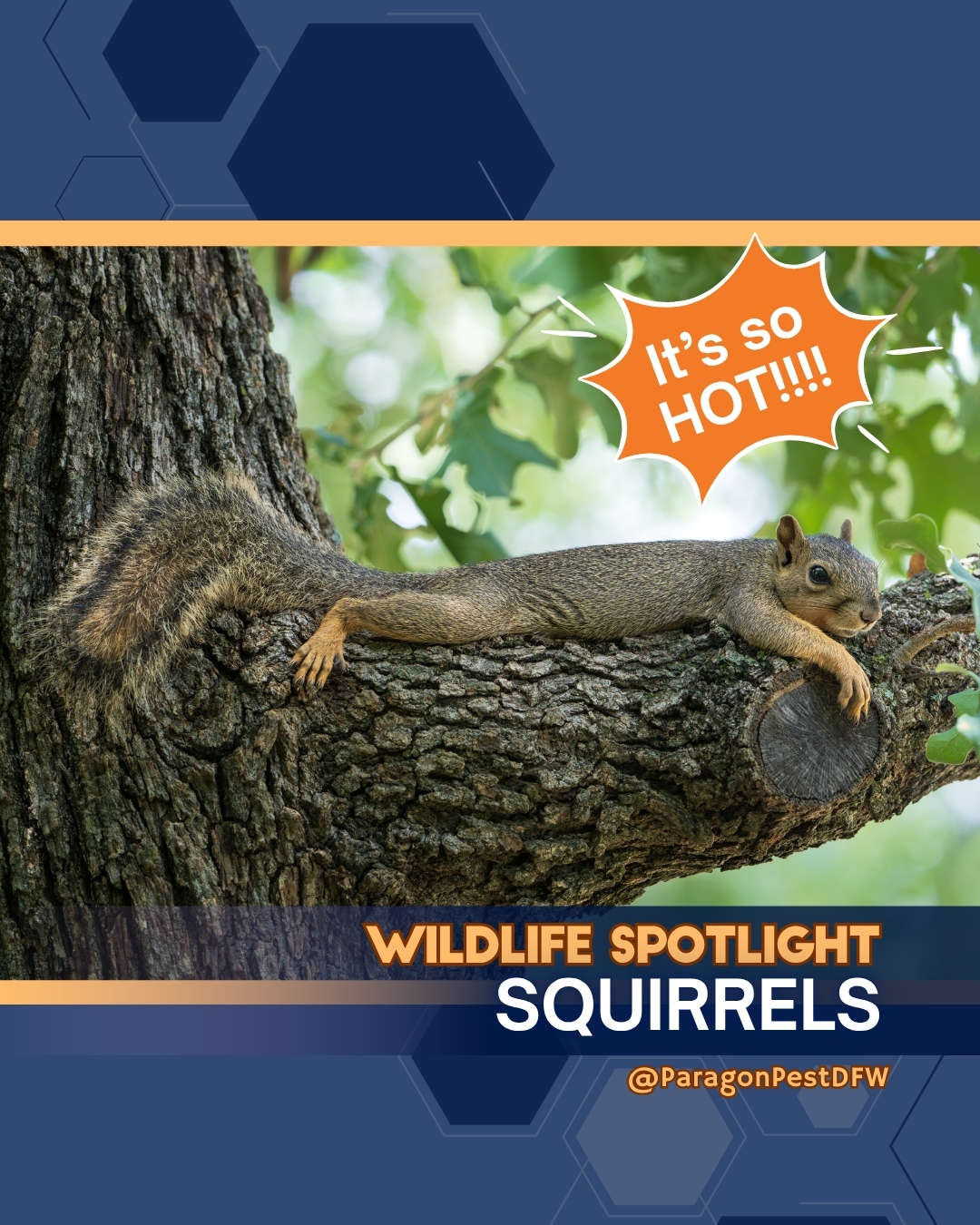
Wildlife Spotlight: How Squirrels Handle the Texas Summer Heat
If you’ve looked outside during a hot Texas afternoon and spotted a squirrel stretched completely flat across a tree branch, fence, or patch of shade, don’t worry. Our squirrels haven’t collectively given up on life.
They’re hot, too.
Squirrels have several ways of adjusting their behavior when temperatures climb. During the hottest stretches of a Dallas-Fort Worth summer, those adaptations can become especially noticeable. From changing when they’re active to the wonderfully dramatic-looking “sploot,” squirrels have their own strategies for dealing with extreme heat.
Squirrels Change Their Summer Schedule
Like many animals, squirrels can adjust their daily activity based on the temperature.
During periods of extreme heat, you may notice more squirrel activity during the cooler parts of the day, particularly in the morning. When afternoon temperatures become intense, spending less time running, climbing, and foraging in direct heat helps them avoid unnecessary exertion.
Instead, squirrels may spend more of the hottest part of the day resting somewhere shaded before becoming active again as conditions become more comfortable.
So, if your normally busy backyard squirrels seem to disappear during a scorching afternoon, they may simply be waiting out the worst of the heat.
Yes, Squirrels Really Do “Sploot”
One of the more entertaining squirrel behaviors becomes especially noticeable during hot weather.
A squirrel may stretch out flat on its stomach with its legs extended and its body pressed against a cooler surface. This position is commonly called “splooting.”
Although it looks a little ridiculous, there’s a practical reason behind it. Pressing the less-furry underside of the body against a cooler surface can help the squirrel release body heat.
You might see squirrels splooting across shaded tree branches, concrete, decks, fences, or other surfaces that offer some relief from the surrounding temperature.
In most cases, a squirrel lying flat like this during hot weather isn't necessarily sick or injured. It may simply be trying to cool itself down.
Shade Becomes Valuable During Extreme Heat
DFW summers make shady areas important for wildlife.
Trees provide squirrels with more than a place to climb. Their leaves and branches create sheltered areas where squirrels can rest away from direct sunlight. Nests and other protected spaces can also provide somewhere to retreat during uncomfortable conditions.
This is one reason squirrel behavior around your property may look different depending on the time of day. An area bustling with activity in the morning can become surprisingly quiet once the afternoon sun arrives.
Water Can Bring Wildlife Closer to Homes
Squirrels need access to water, and prolonged hot, dry weather can affect where they find it.
Around residential properties, available water might come from birdbaths, sprinklers, irrigation systems, fountains, pools, or other outdoor sources. Homeowners may notice squirrels and other wildlife visiting these areas more frequently when natural sources are harder to find.
Seeing a squirrel stop for water isn't unusual. However, regularly available food, water, and shelter can make a property more attractive to wildlife in general.
When Squirrels Get a Little Too Comfortable
Watching squirrels leap between trees is one thing. Hearing one moving around inside your attic is another.
Squirrels are part of our local DFW wildlife, and seeing them outdoors usually isn't a reason for concern. Problems begin when they find an opening that allows them to move into a home.
Rooflines, vents, gaps, and damaged areas around a structure can provide potential entry points. Once inside, squirrels may use attic spaces for shelter or nesting.
If you suspect squirrels or other wildlife have made their way into your home, avoid sealing an entry point until you know the animal is safely outside. Young animals may also be present depending on the time of year.
Paragon Pest Control offers wildlife inspections and exclusion services throughout the Dallas-Fort Worth area. Our team can identify how wildlife is getting inside and determine the appropriate next steps for safely keeping it out.
So the next time you see a squirrel completely flattened against a tree branch on a blazing Texas afternoon, give it a little credit. We're all just trying to survive summer in DFW.